US law · Reading the source
A bill, a law and a court decision are different things
A legal headline can describe a proposal, an enacted rule or a decision in a case. Those are not interchangeable sources.
A headline says that lawmakers “move to ban” something. Another says that a judge “blocks” a rule. Neither phrase alone tells you what the law currently requires of a particular person. The first question is not whether the headline sounds decisive. It is what kind of legal event the source actually describes.
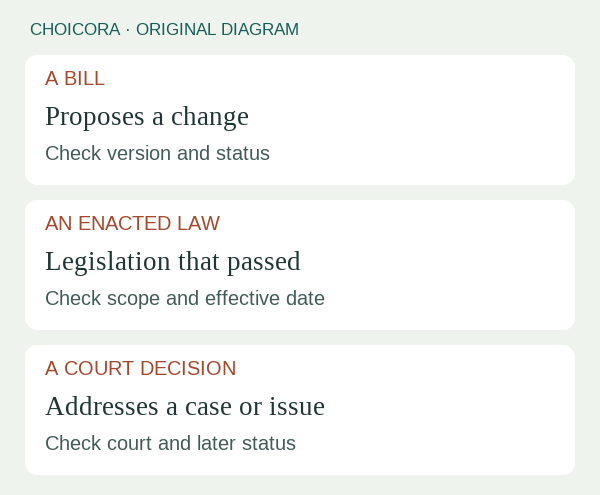
A bill is a proposal
USAGov describes a bill as a proposal for a new law or a change to an existing law. Introduction is not enactment. The federal process can involve committees, votes in both chambers and presidential action, with other constitutional routes and conditions. A story about one step should not be rewritten as if the whole process has finished.
Congress.gov can show a federal bill's text and actions. The title, Congress number, version and latest action matter. Two versions of a proposal may have different wording. Quoting one without its status can give a reader the wrong impression of what is already in force.
An enacted law is a different source
USAGov points readers to enacted legislation and to the U.S. Code, which compiles most federal public laws currently in force. The source's date and version belong beside the explanation. A short article should identify the text it checked, rather than let a reader mistake an old summary for the latest source.
The federal source does not answer every state-law question. If a topic concerns a state rule, the relevant legislature, code and other official state sources need their own check. A federal overview is not a fifty-state guide.
A court decision addresses a case or legal question
Courts hear disputes and apply legal rules within their authority. In civil litigation, a complaint contains claims. A court order or judgment is a different part of the record. An agreement resolving a dispute is not the same thing as a jury's factual findings after trial.
A decision's court, date, issues, reasoning and procedural stage matter. An appeal or later order can change the picture. A headline about one result should not silently become a nationwide rule or a guarantee about another person's case.
Read a headline with four questions
- What source is this: proposal, enacted text, complaint, agreement or decision?
- Which jurisdiction and which court or legislature?
- What is the date, version and current procedural status?
- What does the source actually establish, and what remains undecided?
Use the original to check the summary
A clear article can translate an unfamiliar term and explain why it matters. It should still show where the rule or outcome came from. For federal legislation, USAGov's research guide links the tools for finding bills and laws. For a case, look for the court's own record and later developments, not just an older news story.
This article is a map of source types. It does not determine which rule controls an individual's situation or assess whether a law or decision is valid. It has no search box for private cases and does not collect legal documents.