US law · Documents & consumer problems
A debt letter is not the same thing as a court paper
Both may mention money. They do not do the same job. Learn the distinction before treating one process as another.
A message saying that you owe money and a document in a lawsuit can feel equally urgent. But they belong to different processes. Understanding that difference is more useful than assuming that every formal-looking letter is a court order, or that every unfamiliar document is only a collection demand.
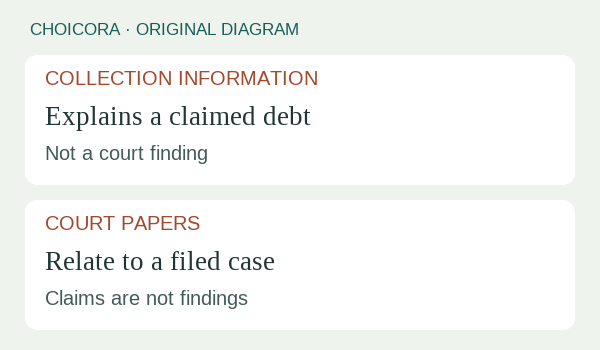
One role: information about a claimed debt
The Consumer Financial Protection Bureau explains that debt collectors generally must provide validation information about a debt. This commonly arrives in an initial written notice or shortly after the first communication. It can identify the collector, creditor, account information and amount, and explain ways to dispute or request information about the debt.
That information can help a person understand what is being claimed. It is not itself a court's finding that the person owes the money. A collector's demand and a judgment have different legal roles.
Another role: papers in a lawsuit
A lawsuit involves a court process. In the federal civil process described by U.S. Courts, a plaintiff files a complaint, and a copy is served on the defendant. State procedures and document names can differ. A complaint states claims; it is not the same thing as a judge deciding that those claims are true.
The CFPB treats being sued as different from receiving a collection communication. Its guidance says to read lawsuit papers carefully and respond by the required court deadline. This page does not calculate that deadline or supply a response. A debt-dispute process should not be assumed to replace the court process.
Identify the role, not a real document
What can this tell you?
These are invented teaching descriptions, not real letters or cases. Select one to reveal the limit of the information.
A claim about a debt
Validation information can help explain the claimed debt and dispute process. It does not, by itself, mean a court has ruled that the debt is owed.
A logo is not authentication
Our diagrams show concepts, not a checklist that can prove a document is genuine. Names, seals, case numbers and formatting can be copied. Conversely, an unexpected delivery method or unfamiliar layout alone does not establish that papers are invalid.
If a document appears to concern an actual case, use the relevant court's independently located official website and contact details to understand its records and instructions. Do not rely only on a telephone number or link in a message you are unsure about. This page does not authenticate service, identify the correct court for a dispute or determine whether a deadline applies.
Keep the two questions separate
“What is being claimed about this debt?” and “What is happening in a court case?” are different questions. A useful first step in learning is to identify which process a source is describing. The answer still depends on the actual documents, applicable law and current court instructions.
Do not upload private letters here. This interaction never asks for names, account numbers, balances or files. It is an explanation of document roles, not an assessment of your situation.
Sources & limits
- CFPB: validation information from debt collectors
- CFPB: when a debt collector or creditor sues
- U.S. Courts: federal civil-case process
Scope: introductory U.S. consumer/legal-process education. State law, debt type, collector coverage and court procedure can change the answer. No legal deadline, response form or individual advice is supplied.